
PROJECT 06 · 2026-10-17
Five Key Insights from Three Poultry Manure Resource Recovery Projects in Singapore
Reducing Wastewater Generation, Treatment Infrastructure Costs, and Overall Manure Processing Costs
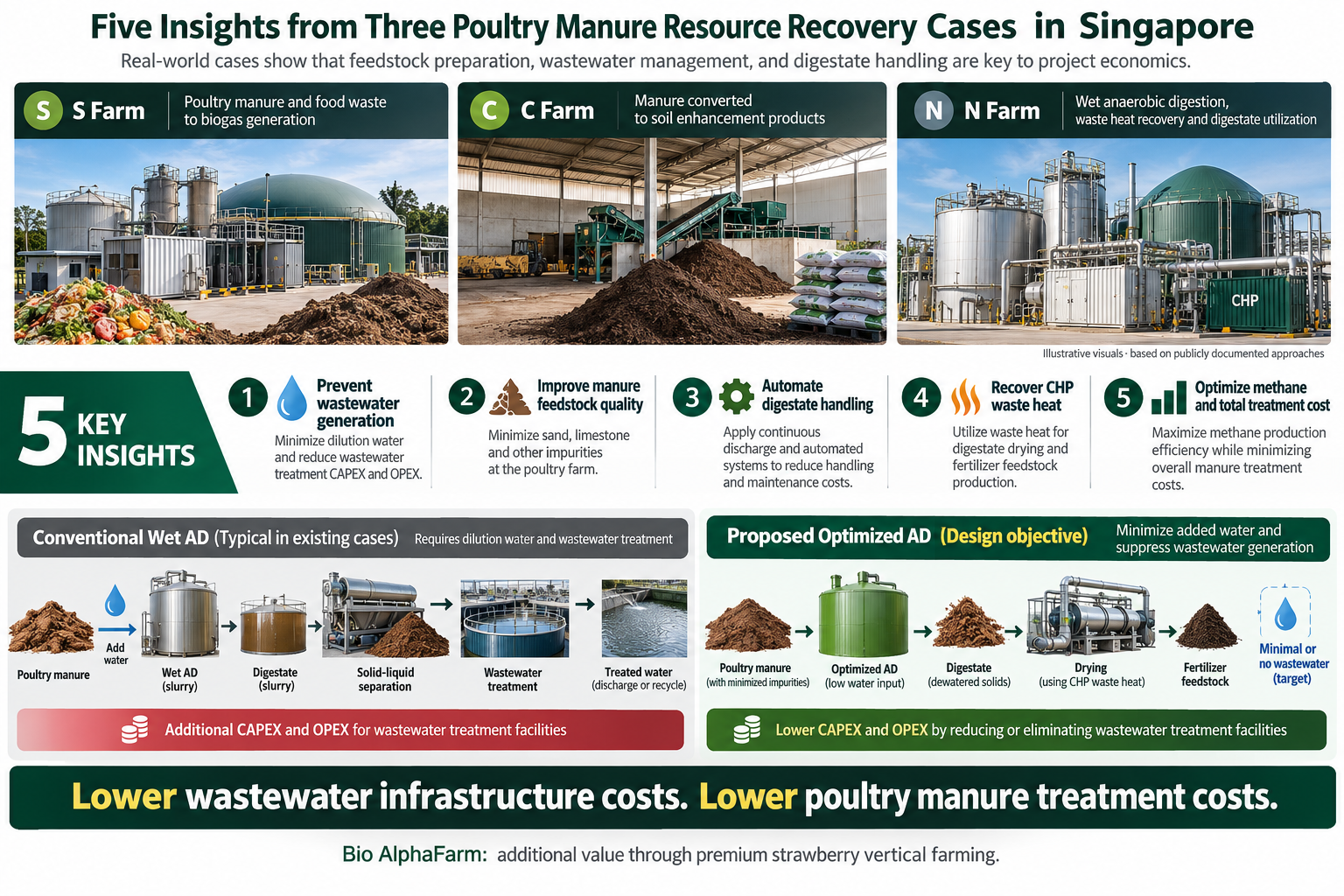
1. Three Singapore Case Studies
Singapore's poultry farms demonstrate different approaches to converting chicken manure into renewable energy and valuable resources.
SC Farm — Biogas Power Generation
A biogas-to-power model utilizing chicken manure and food waste. Published process information includes feedstock screening, anaerobic digestion, power generation, dewatering, and wastewater treatment.
CA Farm — Manure Resource Recovery
A resource recovery initiative converting poultry manure into soil enhancement products, demonstrating the importance of by-product utilization and commercial value recovery.
NN Farm — Biogas, Waste Heat and Digestate Recovery
A published 2017 technical study describes slurry preparation, removal of sand and limestone, anaerobic digestion, wastewater treatment and water recycling, waste heat recovery, and the utilization of digested solids as fertilizer feedstock.
These cases highlight the importance of evaluating not only energy production but also the capital and operating costs associated with feedstock preparation, wastewater treatment, and digestate handling.
2. Five Key Insights
1. Prevent Wastewater Generation at the Source
Minimize dilution water requirements and wastewater generation through optimized AD process design. Evaluate near-zero wastewater and Zero Liquid Discharge (ZLD) solutions to reduce treatment infrastructure CAPEX and OPEX.
2. Improve Feedstock Quality at the Poultry Farm
Reduce sand, limestone, and other inert materials through better manure collection and primary contamination control. Establish practical feedstock quality responsibilities between poultry farms and bioenergy operators.
3. Reduce Digestate Handling Costs
Introduce continuous digestate discharge and automated handling systems to reduce periodic cleaning, removal, and maintenance expenses.
4. Utilize CHP Waste Heat for Fertilizer Feedstock Production
Recover waste heat from CHP systems for digestate drying and supply processed solids to fertilizer manufacturers, subject to product quality and market requirements.
5. Optimize Methane Efficiency and Total Treatment Economics
Evaluate the integrated economics of methane production, feedstock preparation, wastewater minimization, digestate management, and energy recovery.
3. Our Strategic Direction
Our key direction is to prevent wastewater generation at the source, reduce treatment infrastructure CAPEX and operating costs, and develop a mutually beneficial bioenergy model that also lowers manure treatment costs for poultry farms.
Our proposed integrated approach combines optimized AD, feedstock quality management, continuous digestate discharge, CHP waste heat drying, and fertilizer feedstock recovery.
The objective is to improve overall project economics while sharing the benefits between poultry farms and bioenergy operators.
Additional revenue opportunities may be developed through integration with Bio AlphaFarm's premium strawberry vertical farming system.