
InsightsAlphaFarm2026-06-30 · 5 min read
What Is a Strawberry Vertical Farm? Concept and Principles
A strawberry vertical farm grows strawberries indoors on stacked cultivation racks, producing a uniform crop year-round regardless of weather or season. Here is the concept and how it works.
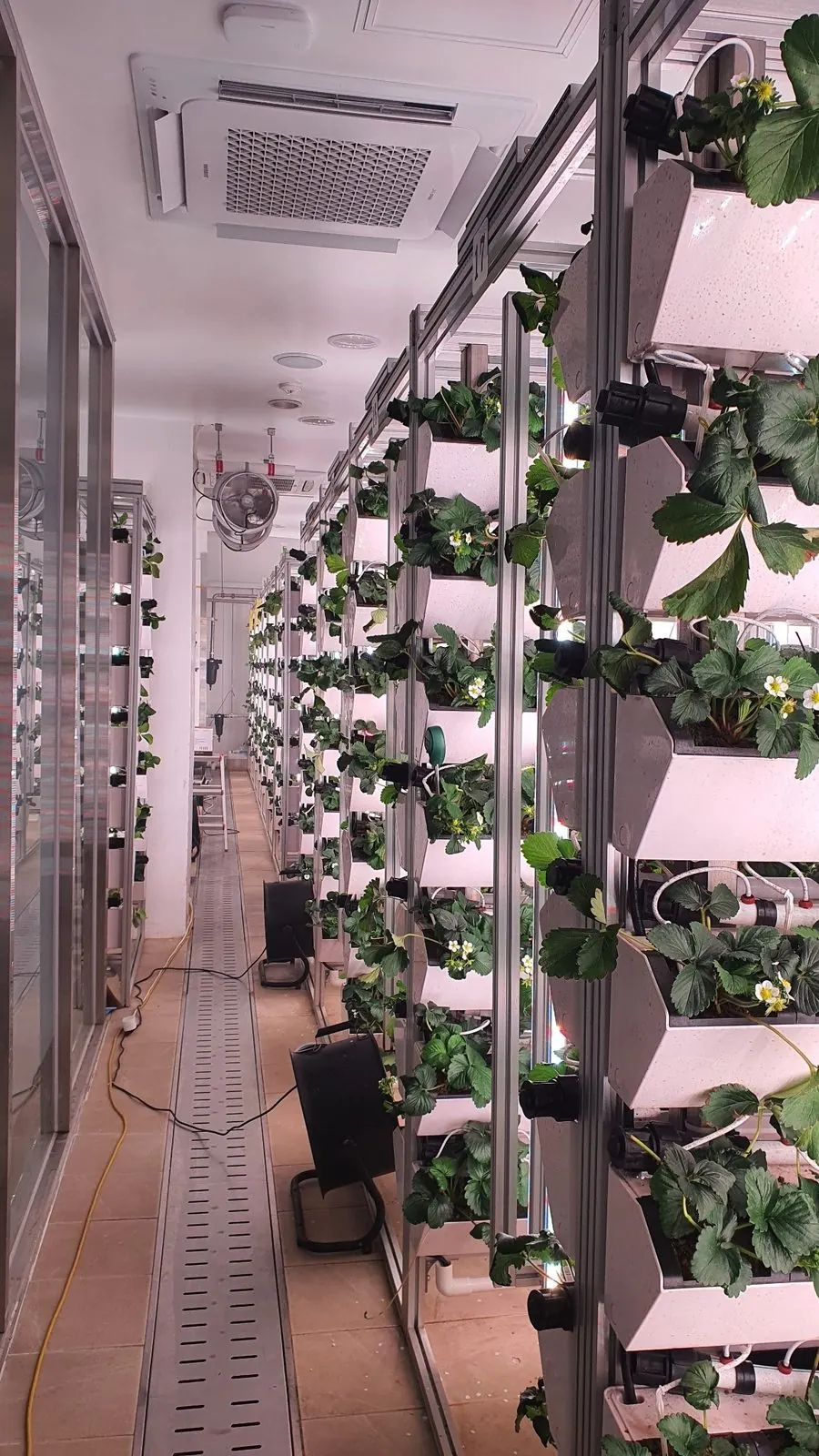
What is a strawberry vertical farm
A strawberry vertical farm stacks cultivation racks vertically to grow strawberries at high density indoors. Nutrients reach the roots through a nutrient solution instead of soil, light comes from LEDs, and temperature, humidity, and CO₂ are precisely controlled by equipment. In short, people design the entire growing environment.
How it works — controlling the environment
The core of a strawberry vertical farm is optimizing every condition strawberries need to grow.
- Light: LED intensity and spectrum tuned to strawberry growth
- Temperature & humidity: a uniform climate via low-temperature dehumidification
- CO₂ & nutrients: supplied in the right amount for each growth stage
- Stacked structure: multiple layers on a small footprint for higher productivity
How it differs from open-field and greenhouse farming
Open-field and greenhouse cultivation depend heavily on weather, sunlight, and pests, and strawberry season concentrates in winter and spring. A vertical farm controls conditions indoors, isolated from the outside, so it produces a uniform crop year-round regardless of season.
Why it draws attention
Strawberry vertical farms draw attention as a premium business for clear reasons.
- Year-round production → off-season supply and pricing power
- Uniform sweetness and size → suited to premium and wholesale markets
- Production near cities → freshness and logistics advantages
- Data-driven operation → easier quality and productivity management