
InsightsAlphaCooling2026-06-23 · 5 min read
Why Condensation Forms in Food Factories — and How to Stop It
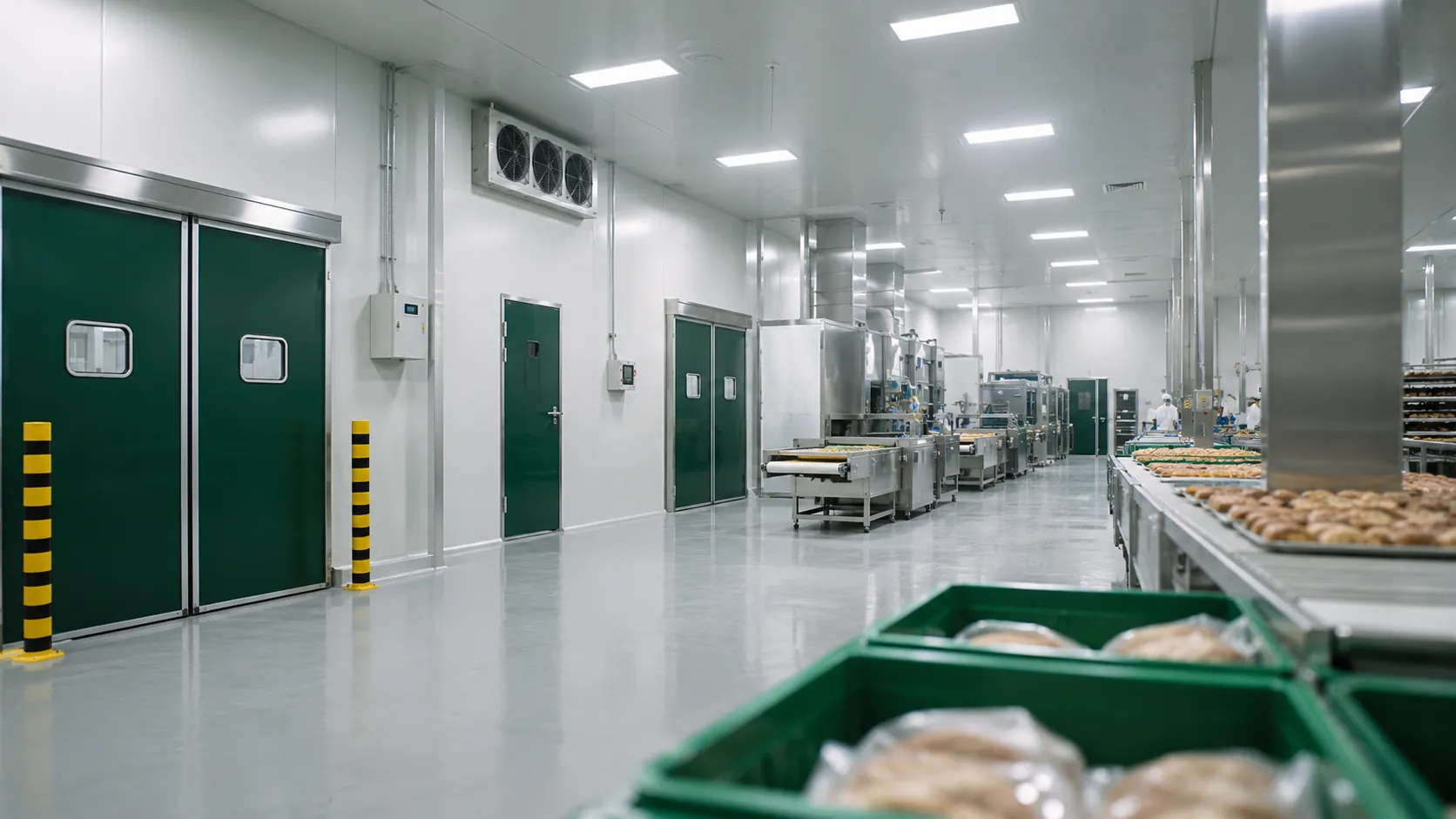
Every summer, water droplets form across food factories and packing rooms. Condensation dripping from the ceiling onto products and packaging leads straight to hygiene incidents and claims. Condensation isn't fixed by 'just cooling more' — you have to understand the cause.
Why condensation forms — dew point and surfaces
The colder air gets, the less moisture it can hold; that threshold is the 'dew point.' When a cold surface — ceiling, wall, pipe, floor — drops below the surrounding air's dew point, moisture condenses on it as droplets.
It's worst in summer for a clear reason: hot, humid outdoor air entering through doors and loading bays spikes indoor humidity, and meeting cold cooling surfaces makes condensation surge. So condensation is really a problem of surface temperature, air dew point, and supply-air humidity.
- Surface temperature: cold ceilings, pipes, etc.
- Dew point: the temperature at which air begins to condense
- Supply-air humidity: raised by incoming outdoor air
The real cost of condensation
Condensation isn't a minor nuisance — it becomes direct loss.
- Hygiene: dripping ceiling condensation contaminates products, HACCP non-conformance risk
- Mold & bacteria: constantly wet surfaces breed mold → odor and re-work costs
- Quality: wet packaging, label defects, product moisture uptake
- Safety: slippery floors and worker accidents
Why cooling and ventilation alone fail
Common fixes miss condensation for a reason. Cooling harder makes surfaces colder and can worsen condensation. Ventilation backfires in seasons when outdoor air is more humid than indoors. Ordinary dehumidifiers lose efficiency and frost up in cold spaces.
The key is an integrated design that lowers the supply air's humidity (dew point) while keeping the space cold. Temperature and humidity must be controlled together — not separately — to prevent condensation from forming at all.
The low-temperature dehumidification fix — AlphaCooling
AlphaCooling designs cooling, dehumidification, reheat, and airflow as one, lowering the supply air's dew point while maintaining low temperature. For food processes and packing rooms, an inline hot-gas-reheat (HGR) unit removes humidity without overcooling.
By integrating coolers, circulation fans, airflow, and sensors to even out humidity and surface temperature across the whole space, the very conditions that create condensation disappear — from vertical-farm grow rooms to food packing rooms, cold storage, and cold-chain spaces.